When someone says the footage is AI-generated, what's your technical rebuttal?
Anyone can now claim real footage is AI-generated, and there is currently no technical answer. Witness is a free camera app that changes that.
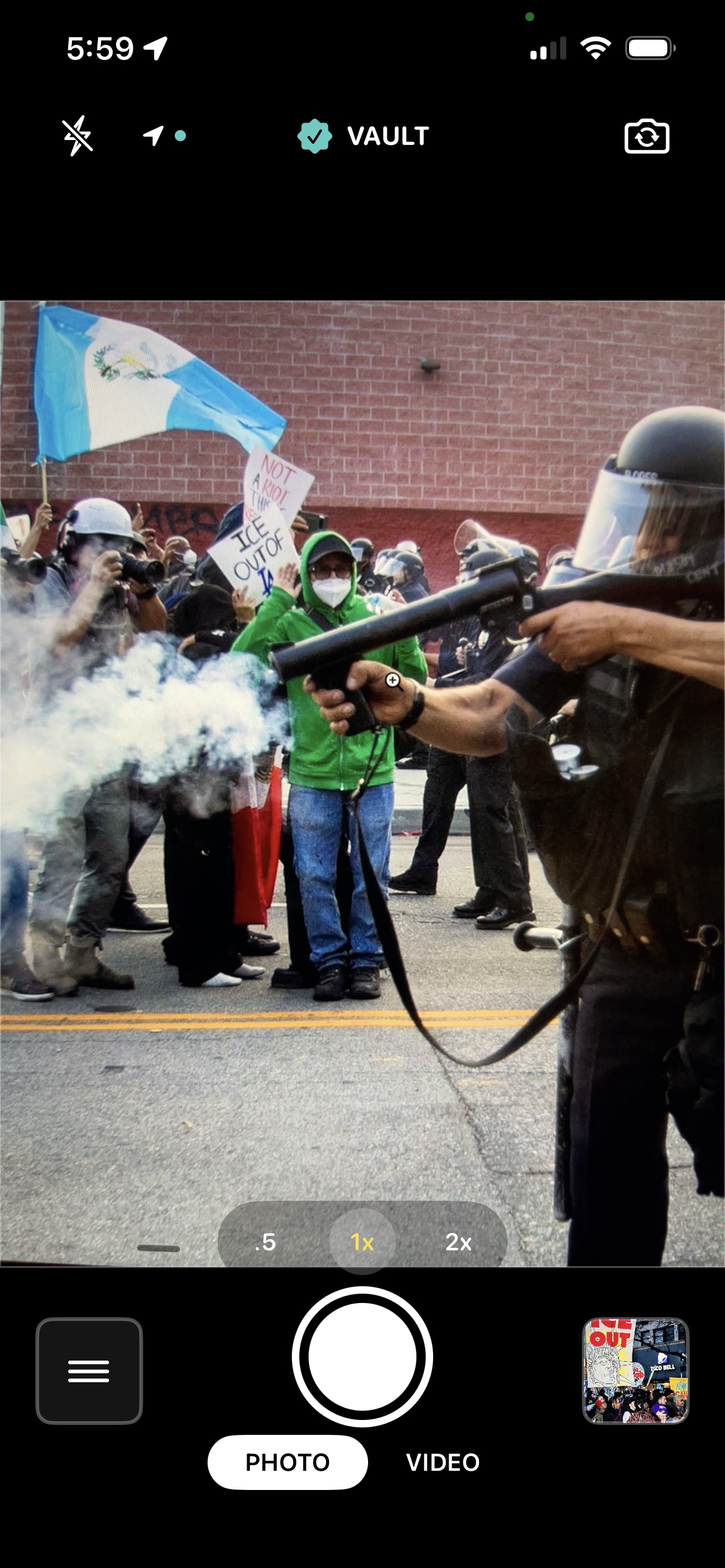
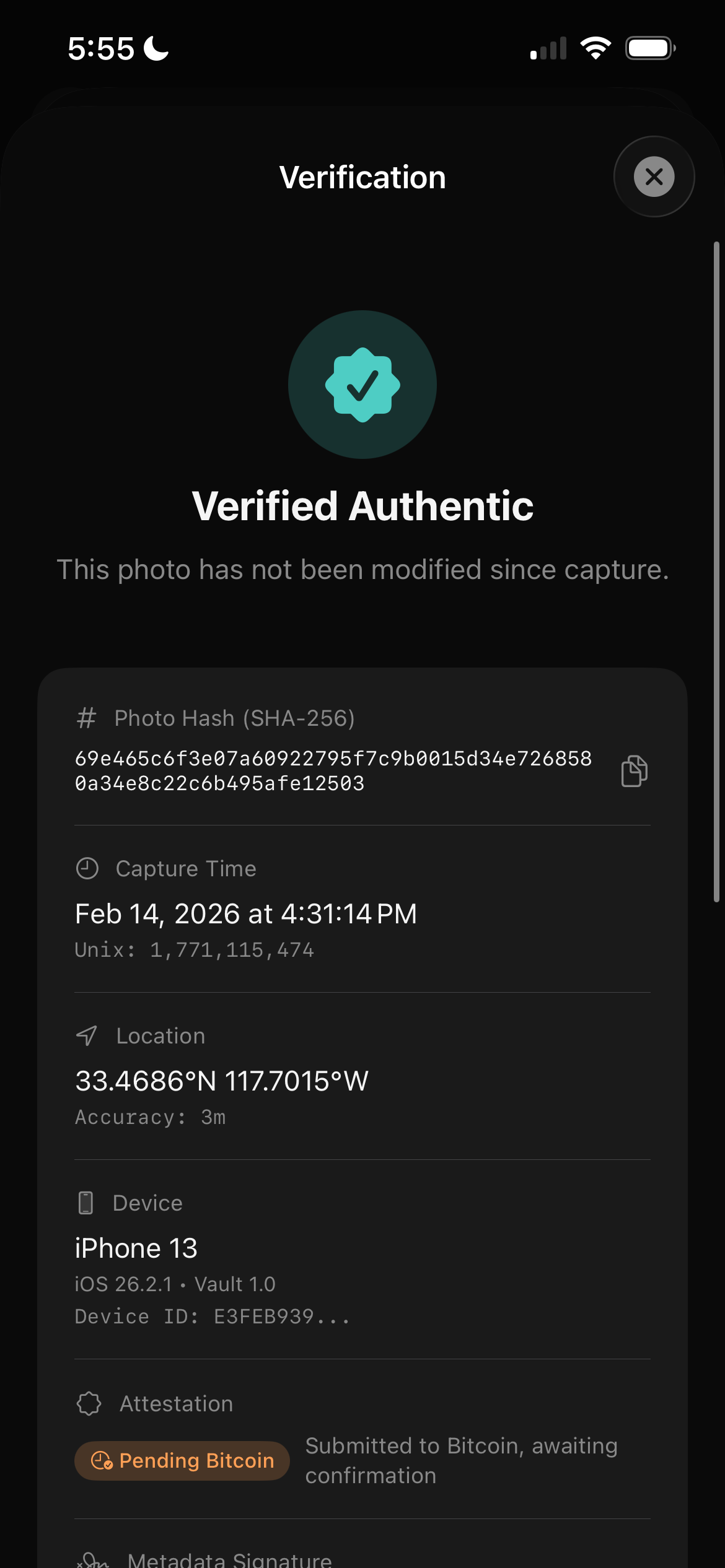
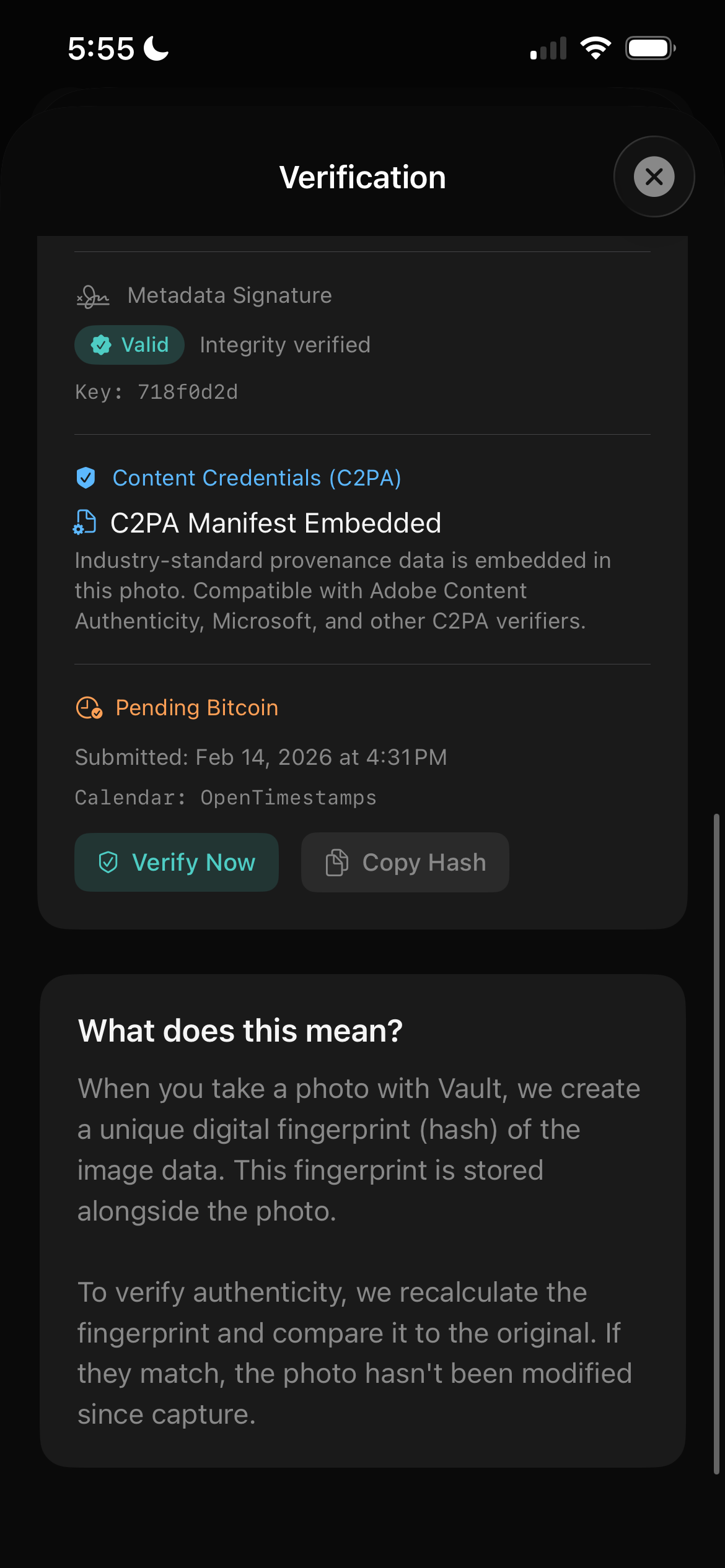
Anyone can now claim real footage is AI-generated, and there is currently no technical answer. Witness is a free camera app that changes that.
Anyone can now claim real footage is AI-generated - and there is currently no technical answer.
The White House posted an AI-altered image of civil rights activist Nekima Levy Armstrong's arrest, making her appear to be crying with darker skin. When called out, they called it "a meme."
After ICE agents fatally shot Alex Pretti in Minneapolis, AI-generated videos flooded social media and got more engagement than the real eyewitness footage.
This is not hypothetical. It is happening now. And it is going to get worse.
The opposing side claims the phone footage your client brought is AI-generated or edited.
There is no technical rebuttal. The judge has to weigh credibility, and AI has made that harder.
You can reliably prove the evidence is real and unmodified. Five independent proof layers give you a technical rebuttal that holds up under scrutiny.
A client brings you photos of injuries, housing conditions, or a police encounter.
Standard phone photos carry editable EXIF metadata. No way to prove they have not been altered.
Your clients' phone evidence is authenticated at the moment of capture and accepted into the record. No ambiguity about whether it's real.
Your legal observers documented a protest. That footage is now evidence in a civil rights case.
Opposing counsel raises the possibility the footage could be AI-generated. The burden shifts to you.
Your footage carries industry-standard credentials that hold up under scrutiny. Verifiable by anyone, forever - no special tools required.
Defense in depth: five independent verification layers, each addressing different trust models and failure scenarios.
Mathematical fingerprint of the image data. Change one pixel and the hash breaks entirely. The same algorithm used in banking and national security.
Hardware-backed proof from Apple's servers that the photo came from a genuine iPhone running the real Witness app. Not emulated, not jailbroken, not spoofed.
Metadata signed by the iPhone's tamper-proof security chip with P256 ECDSA. The signing key never leaves the hardware - not even Witness can access it.
Industry-standard provenance metadata verifiable by Adobe, Microsoft, and news organizations. Your photos carry credentials that any C2PA-compatible tool can read, forever.
Decentralized, permanent proof the image existed at a specific time via OpenTimestamps. No server to subpoena, no company to trust. The timestamp lives on the blockchain permanently.
Other tools verify 1-2 ways. Witness gives you five independent proofs - each with a different trust model.
Challenging all five layers simultaneously requires arguing against multiple independent, well-documented systems.
Nico (JD/MBA, Penn Law & Wharton) spent two years as a Partners for Justice Fellow at the Alameda County Public Defender's Office, working one-on-one with over 200 clients at police stations, jails, encampments, and clinics. Before that, he worked with a nonprofit helping immigrants in ICE detention. He watched documentation get challenged or dismissed because there was no way to prove it was authentic.
Marshall (Applied Mathematics & Computer Science, Brown University) designed Witness's entire five-layer cryptographic verification architecture from scratch. He previously built decentralized authentication protocols and tokenized verification systems. He is the technical mind behind how Witness's proofs work together.
After talking to leading experts in forensic imagery, they confirmed: no tool authenticates photos at the point of capture. Every existing solution tries to detect fakes after the fact.
Nico is not a lawyer. He is a builder who saw a gap in the system and started working on how to close it. Marshall is the engineer making it cryptographically sound.
Witness uses open, auditable standards - SHA-256, C2PA, Apple App Attest, Secure Enclave, and OpenTimestamps. These are not proprietary black boxes. Each layer produces independently verifiable output. We are not yet aware of a case where Witness evidence has been formally admitted, but the underlying standards (particularly C2PA, which is backed by Adobe, Microsoft, and the BBC) are being built toward evidentiary use. We are actively researching admissibility frameworks and welcome conversations with attorneys about this.
Each of Witness's five verification layers is based on peer-reviewed, widely adopted cryptographic standards. SHA-256 is used across federal systems. C2PA is an open specification with public documentation. Apple's Secure Enclave and App Attest are hardware-backed and independently documented. A Daubert analysis would evaluate whether the methodology is testable, peer-reviewed, and generally accepted - all five layers meet those criteria individually. A third-party security audit is planned for 2026 to further strengthen this foundation.
Witness creates a cryptographic record at the moment of capture - hash, signature, attestation, timestamp. If the image is modified after capture, the hash breaks. This provides a tamper-evident baseline. A formal chain-of-custody export format (ZIP with image, metadata, and verification report) is in development for 2026. We want to get this right, and we are talking to defenders about what format would actually be useful in practice.
Yes. Witness captures and hashes photos locally on the device. Verification layers that require network access (Apple App Attest, OpenTimestamps) sync when connectivity returns. This means photos taken in facilities without cell service, or in areas with unreliable connectivity, still get the full verification stack once the device reconnects.
No cryptocurrency, no tokens, no speculation. Bitcoin is used solely as a timestamp anchor via OpenTimestamps - a photo's hash is embedded in a Bitcoin transaction to create permanent, decentralized proof of when the image existed. The photo itself never touches the blockchain. This is a timestamping technique, not a financial product.
Any individual layer can be questioned - that is the nature of adversarial proceedings. The design is defense in depth: five independent verification systems, each with different trust models and failure modes. SHA-256 is mathematical. App Attest is hardware-backed by Apple. Secure Enclave signatures cannot be extracted from the device. C2PA is an industry standard. The Bitcoin timestamp is decentralized. Challenging all five simultaneously requires arguing against multiple independent, well-documented systems.
If AI evidence challenges are on your radar - or if you want to understand what is coming - we would welcome 15 minutes of your time. This is a research conversation, not a sales call.